About the game
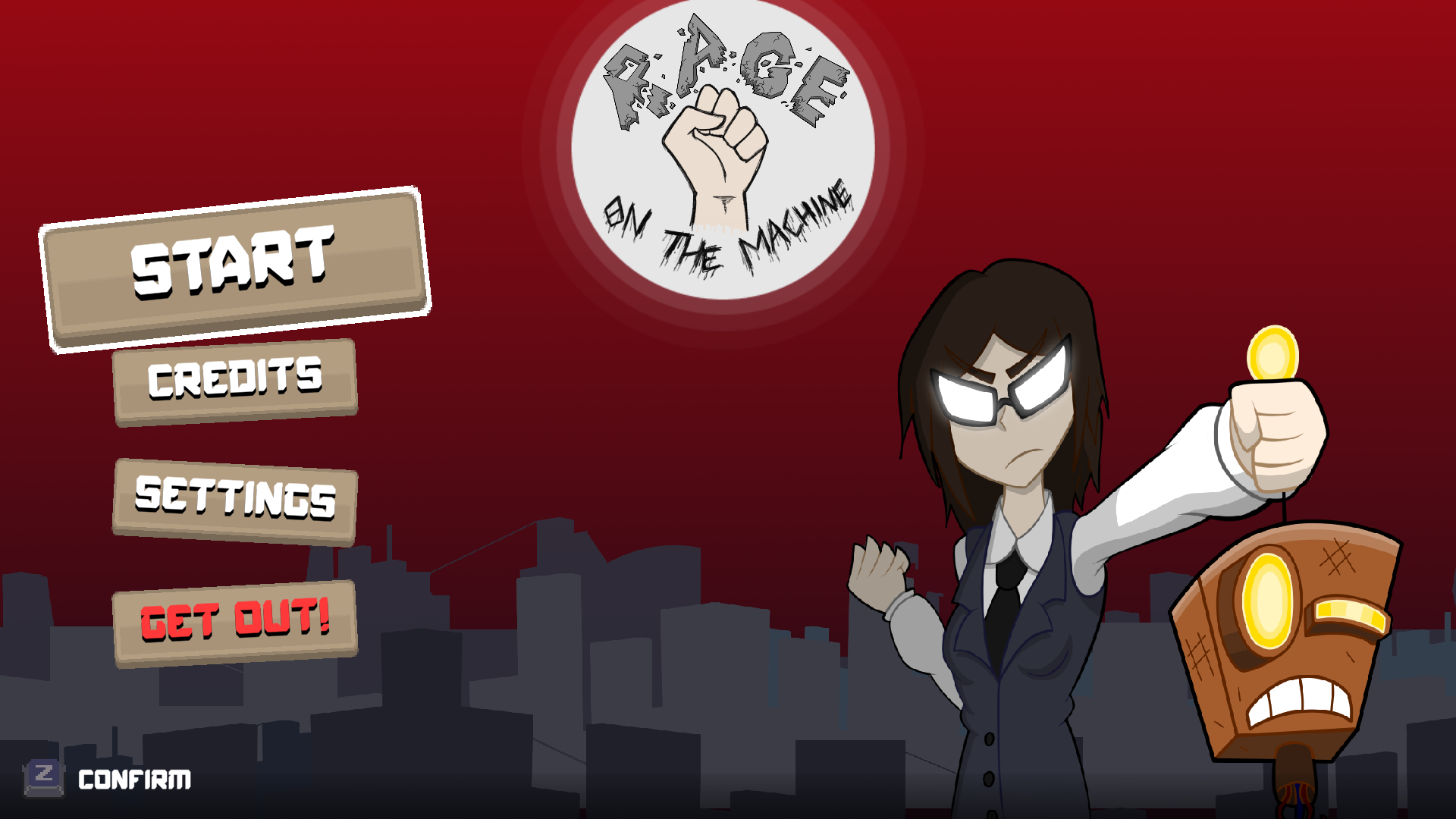
A fighting game with grid based movement and beat 'em up elements in which you play as a simple salary worker. After being fired and replace by a robot, she is about to release her 'rage on the machines'.
Project info
 Roles:
Audio Programmer, Ai Progremmer, Level Designer
Roles:
Audio Programmer, Ai Progremmer, Level Designer Team
size: 5
Team
size: 5 Time frame:
5 months (first version)
Time frame:
5 months (first version) Engine:
Unity (C#)
Engine:
Unity (C#)- Link to Play
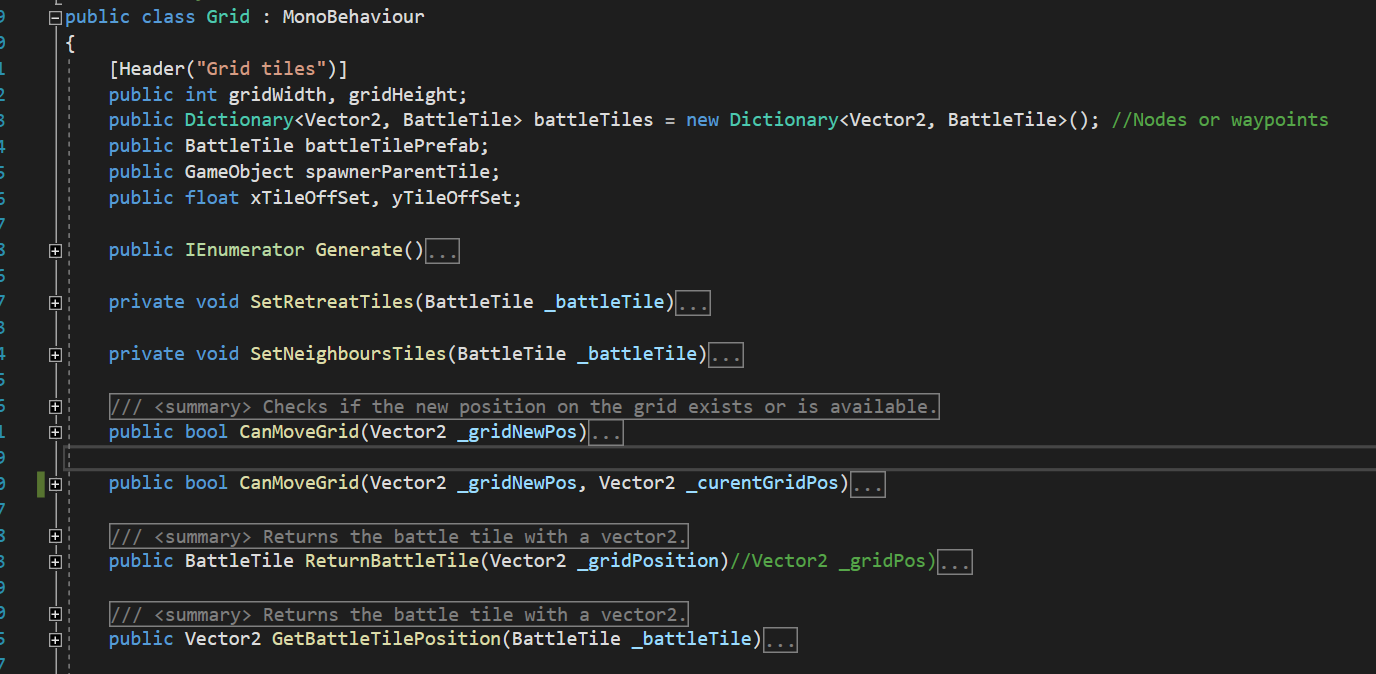
Grid Movement System
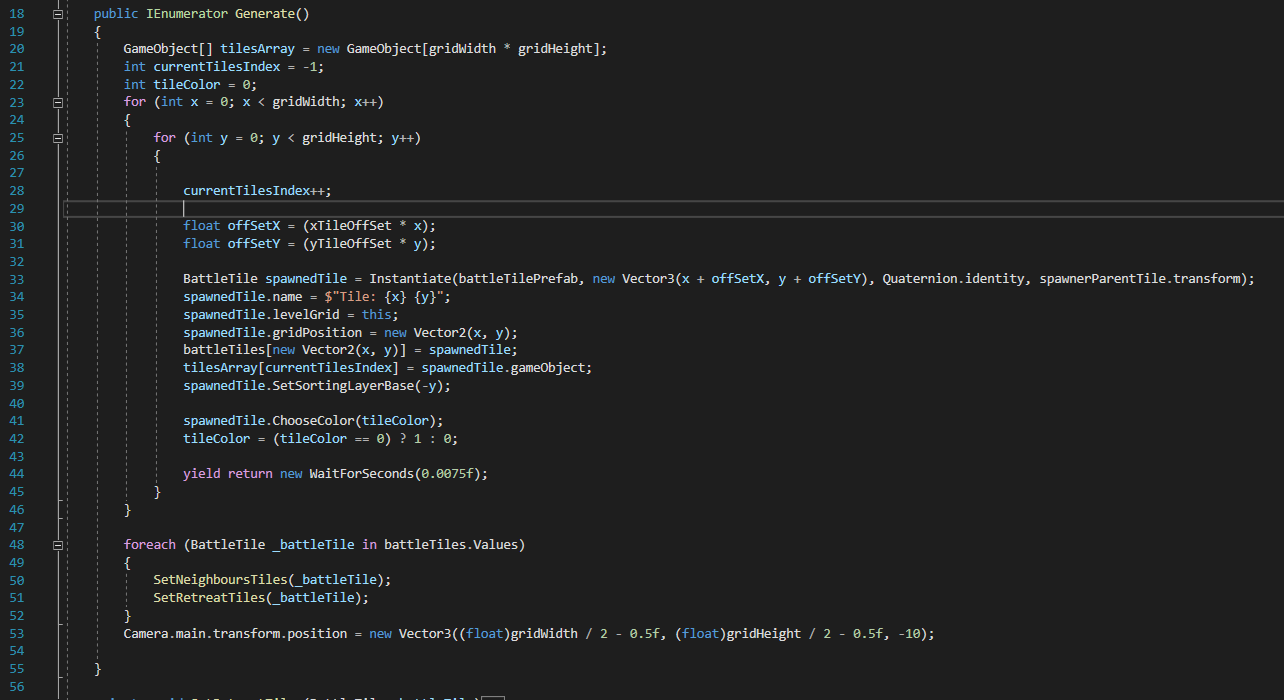
The grid is instantiate by the 'Level generator script', then it starts the coroutine 'Generate' to create the grid.
Progression System
Each level has a number of stages, the stages informs what enemies, gimmicks and items can appear. The chance of a certain object to spawn is based on the quantity of that object in a list.
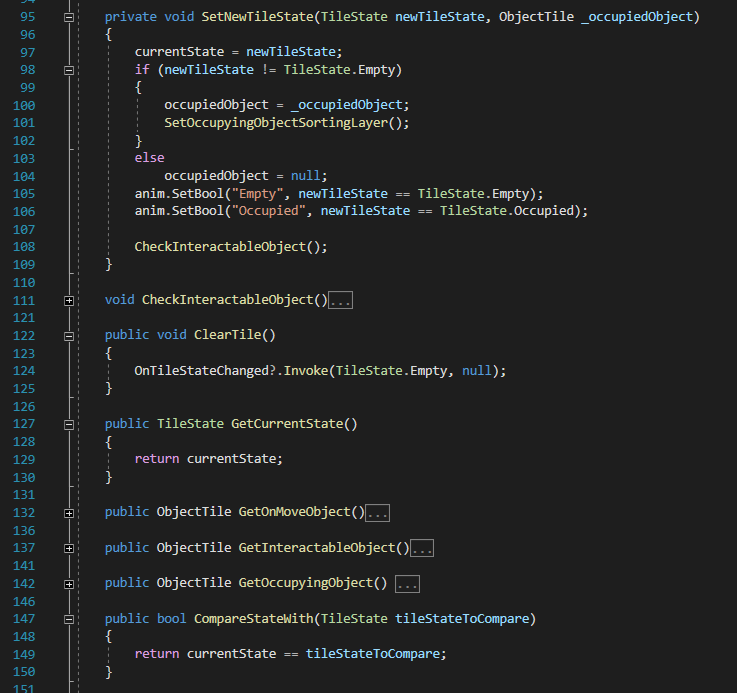
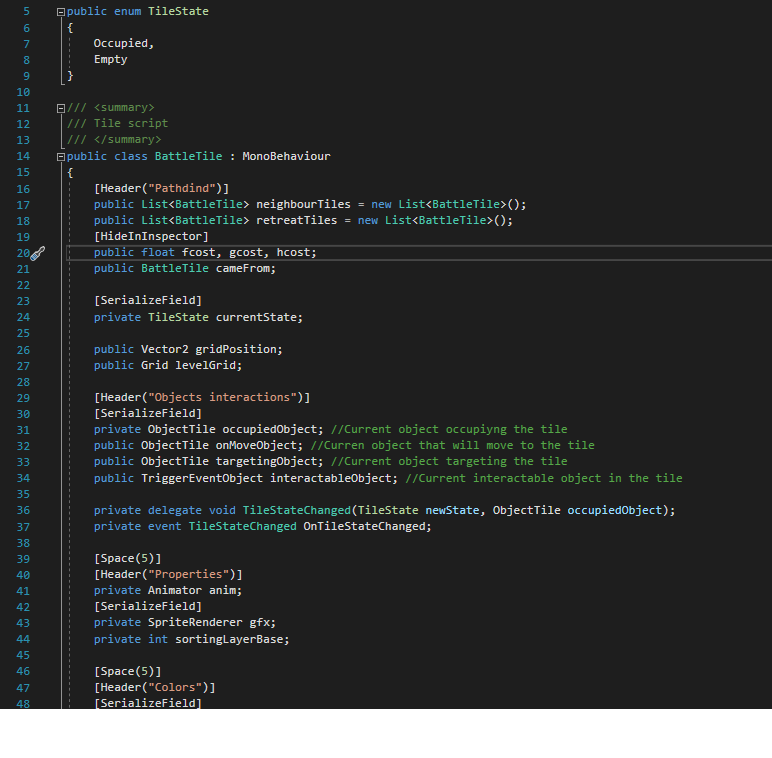
Scripts:
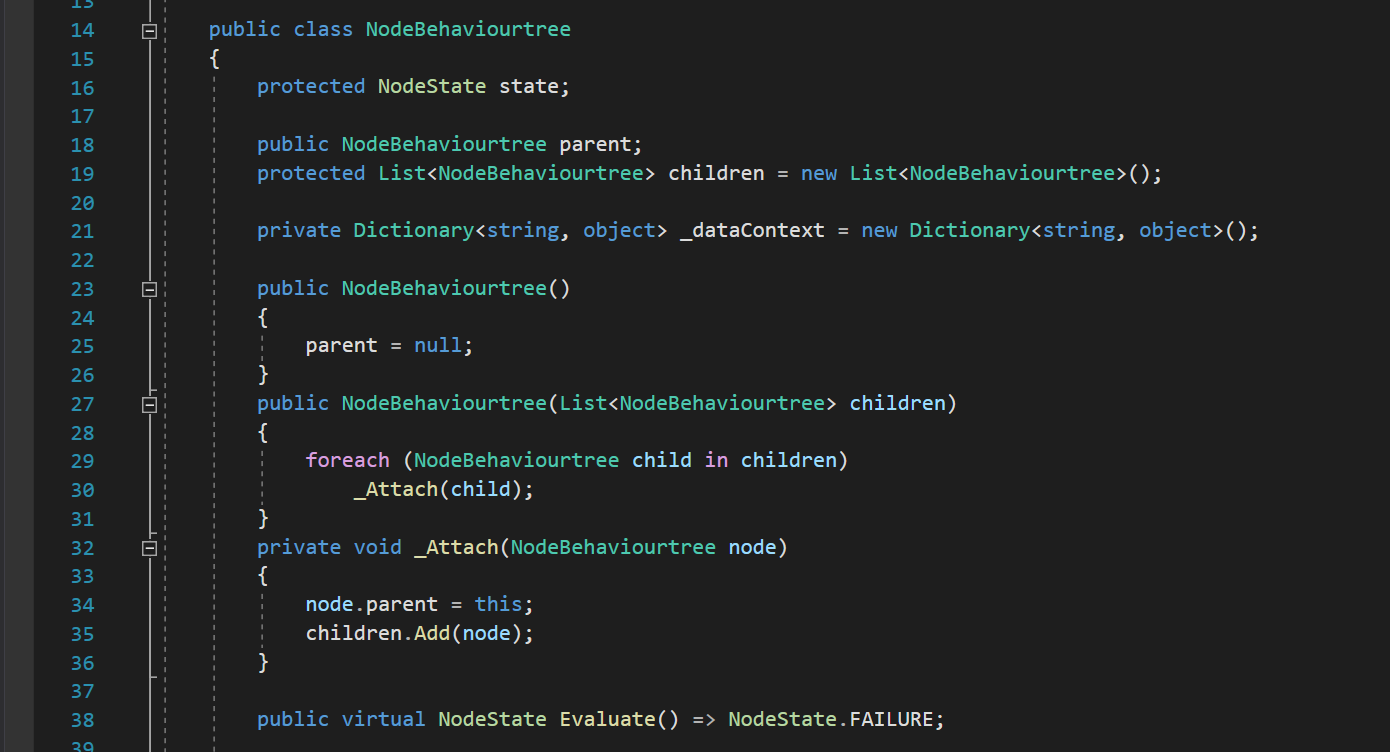
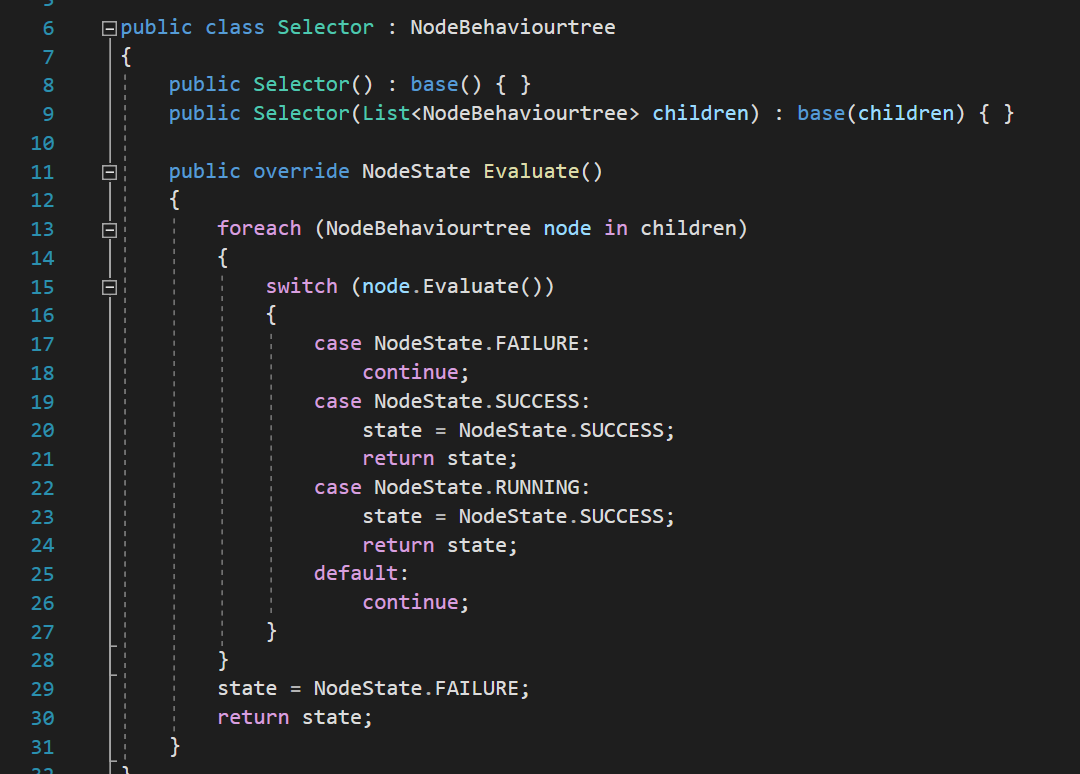
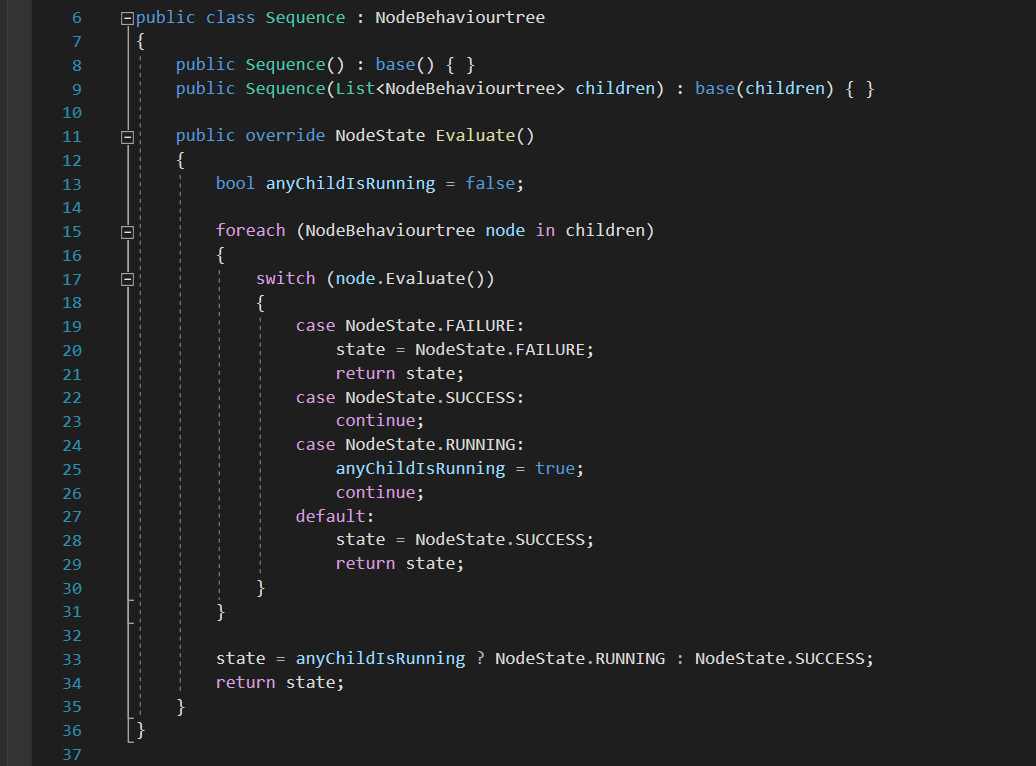
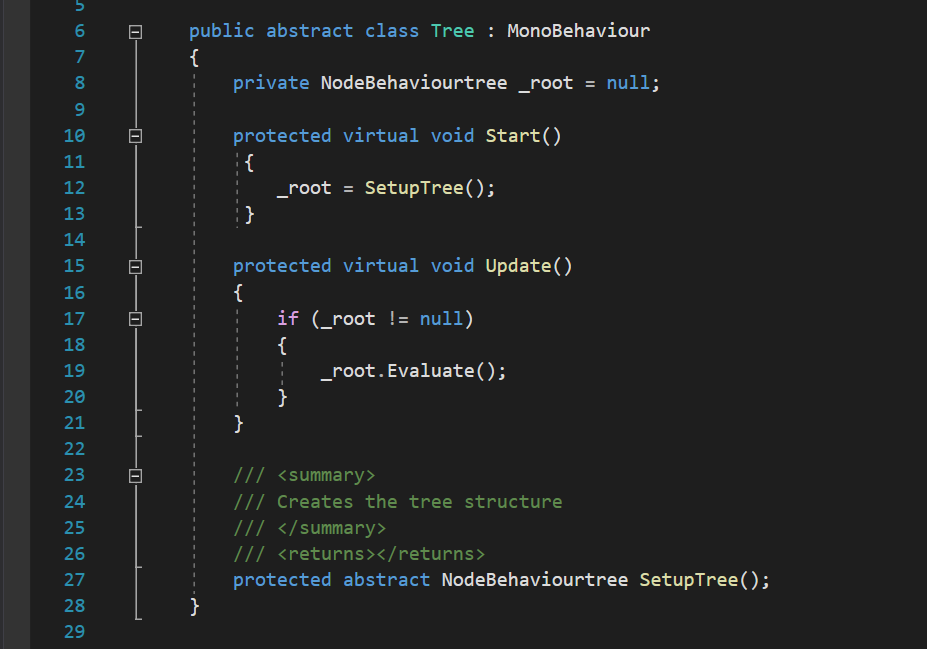
Behaviour Tree
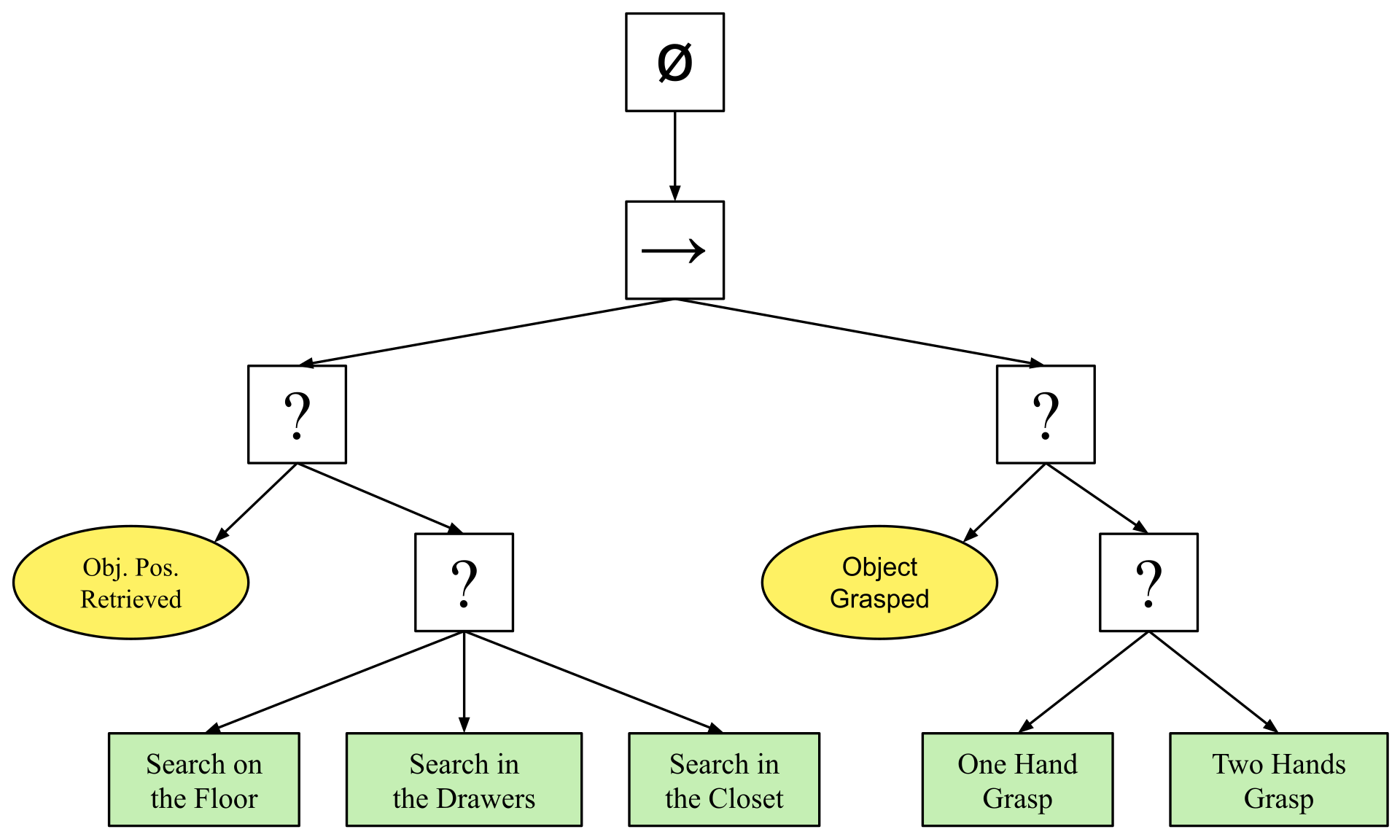
Behaviour tree is a node based structure iused in computer science, robotics, control systems and
video games. It provides a hierarchical way to model and control the behavior of agents or entities
in a system. it's not necessary to know how the tasks are implemented and is scalable in the long
run. it's A more modular and flexible aproach than the hierarchical state machines.
A behavior tree is graphically represented as a directed tree in which the nodes are classified as
root, control flow nodes, or execution nodes (tasks). For each pair of connected nodes the outgoing
node is called parent and the incoming node is called child. The root has no parents and exactly one
child, the control flow nodes have one parent and at least one child, and the execution nodes have
one parent and no children. Graphically, the children of a control flow node are placed below it,
ordered from left to right.
A behavior tree is graphically represented as a directed tree in which the nodes are classified as
root, control flow nodes, or execution nodes (tasks). For each pair of connected nodes the outgoing
node is called parent and the incoming node is called child. The root has no parents and exactly one
child, the control flow nodes have one parent and at least one child, and the execution nodes have
one parent and no children. Graphically, the children of a control flow node are placed below it,
ordered from left to right.
Scripts: